Park Systems Secures KRW 100 Billion in Strategic Financing to Expand Production Capacity and Accelerate Global Growth

Park Systems Corp., a global leader in atomic force microscopy (AFM) and nanometrology, today announced the successful completion of a KRW 100 billion (approximately USD 72 million) strategic financing through the issuance of perpetual bonds with warrants, with Kiwoom Securities and Dominus Investment Management each subscribing KRW 50 billion.
4D-printed absorber uses heat-driven shape change to tune microwave shielding
A 4D-printed microwave absorber uses heat to reshape itself and strengthen internal energy loss, enabling tunable shielding after fabrication.
These tiny holes could change how the world cleans water
A new nature-inspired membrane uses perfectly uniform one-nanometer pores to filter molecules with remarkable precision. The technology could transform industries such as pharmaceuticals and textiles by reducing energy consumption, improving water reuse, and delivering separation performance far beyond current filters.
Researchers use counterjet to reveal clumpy gas near a black hole
Counterjet observations reveal clumpy, dense ionized gas around a supermassive black hole, offering a new probe of AGN jet–gas interactions.
Organic molecule pushes LED emission closer to monochromatic light
A boron-rich ladder molecule narrows spontaneous emission, improving color purity while exposing stability challenges inside OLED devices.
Frequency Combs Bring Nanometer Accuracy to Battery Manufacturing
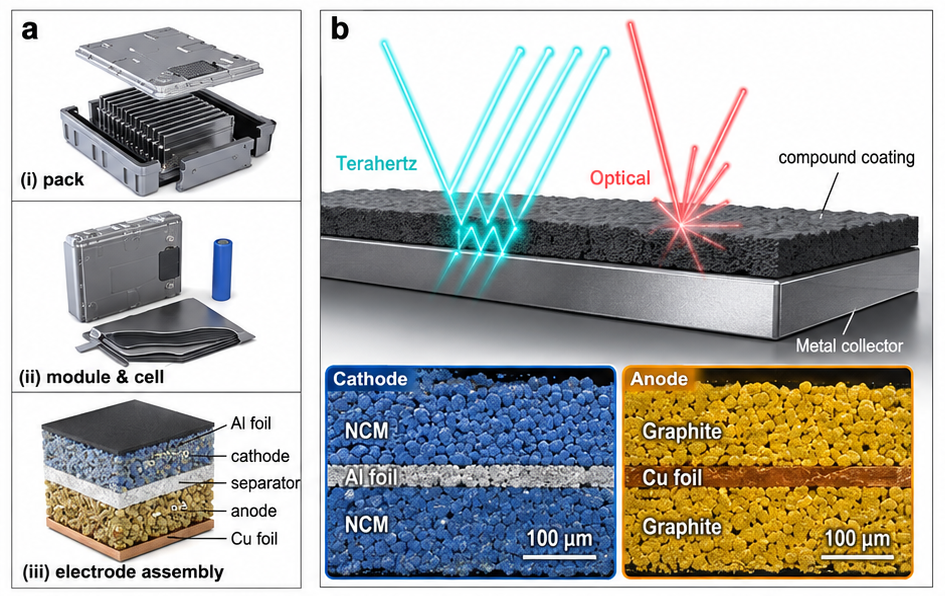
Researchers developed a frequency-comb-referenced terahertz Fabry-Pérot interferometry platform that measures lithium-ion battery electrode thickness with nanometer-scale precision. The method also estimates complex refractive index and supports 3D profiling and dynamic monitoring, offering a path toward more precise, non-destructive battery manufacturing quality control.
Quantum friction causes light to slow down nanoworld movements
A research team in Bochum, Germany has unexpectedly found that light can slow down movements in the nanoworld. This is due to quantum friction, a phenomenon that has been poorly understood until now. The findings are published in the journal Nature.
Organic molecule with ultranarrow emission spectrum could lead to better LEDs
Over the past several decades, light sources have gradually transitioned to light-emitting diodes, or LEDs, and inorganic LEDs are now used across a wide range of applications. In parallel, organic LEDs, or OLEDs, have become widely used in display technologies.
Novel nanowire device offers rapid, noninvasive cancer detection
A research team in Japan has developed an efficient, minimally invasive cancer detection device that uses high-performance zinc oxide nanowires to selectively capture extracellular vesicles (EVs) from bodily fluids.
AI could uncover new physics faster but there’s a surprising catch
Scientists found that transfer learning can make the search for new physics in the universe much faster, slashing the need for expensive simulations. Yet the approach can backfire when AI relies too heavily on familiar patterns, potentially missing evidence of something truly new.
Machine Learning Reveals Hidden Nanophotonic Resonances In Silicon-Gold Nanopillars

Researchers developed a hybrid UMAP-HDBSCAN-SVM machine learning workflow to rapidly classify low-loss STEM-EELS spectrum images and map nanoscale resonances in silicon/gold nanopillars. The approach distinguished plasmonic, hybrid, and dielectric signals across different datasets, supporting faster interpretation of complex nanophotonic materials.
New DNA tetrahedron nanostructures improve targeted cancer therapy delivery

Conventional cancer treatments, such as chemotherapy, often lack specificity and can damage both cancerous and healthy cells, leading to severe side effects.
Pablo Jarillo-Herrero wins Kavli Prize in Nanoscience
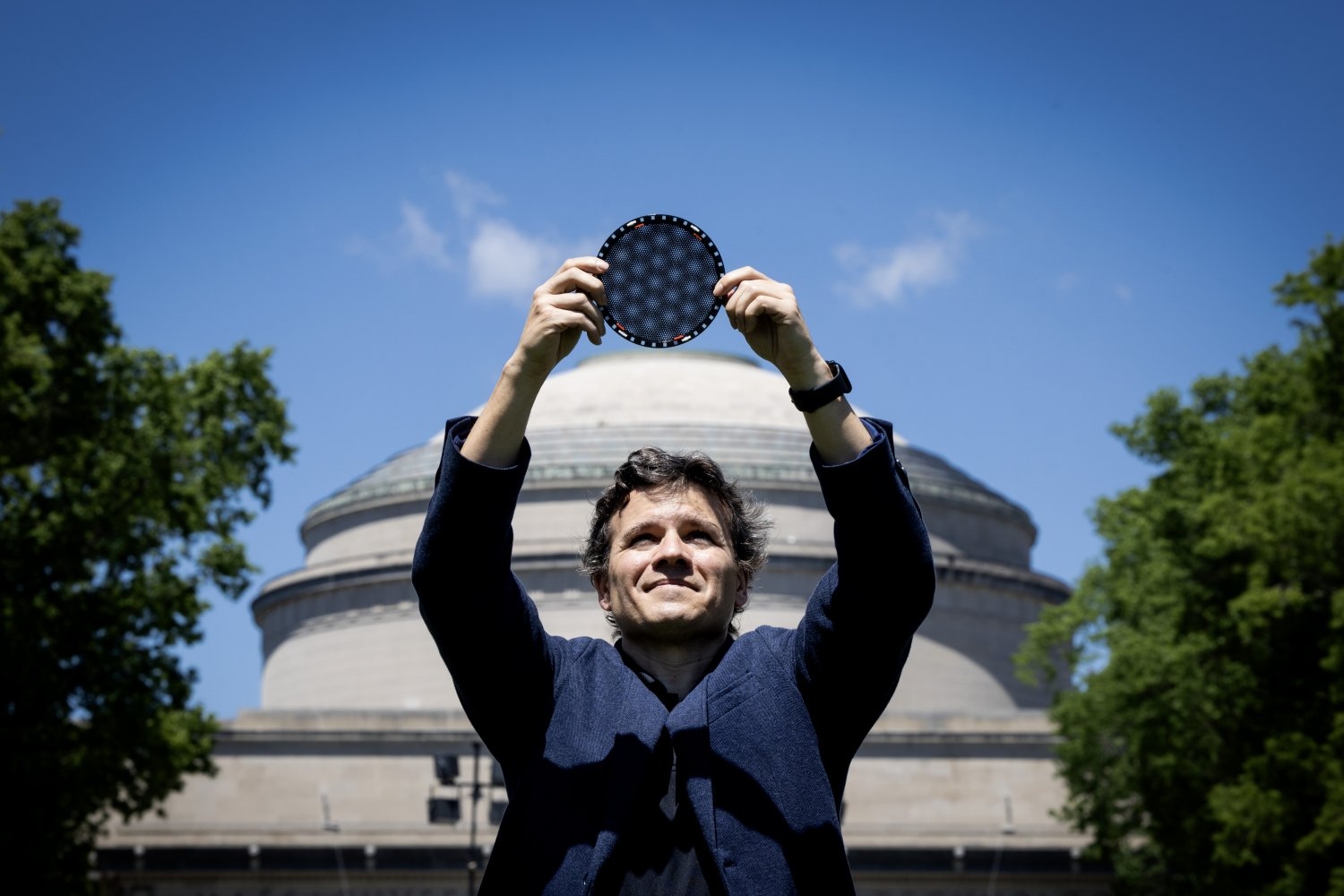
The MIT physicist shares the honor with two others for foundational research establishing the field of twistronics.
Scientists think they solved the mystery of the Amaterasu particle
The mysterious Amaterasu particle may not be a proton at all. New research suggests that some of the most extreme cosmic rays could be ultraheavy atomic nuclei, heavier than iron, which are better able to retain their energy while traveling through space. This idea could help explain how these rare particles reach Earth and provide new clues about the powerful cosmic explosions that create them.
Improving the performance of high-power electronics

By using a thin layer of diamond to manage excessive heat, researchers can boost the speed and energy-efficiency of next-generation wireless devices.
Quantum dots for biomedical innovation: overview, applications, and biosafety
Quantum dots (QDs), a class of versatile semiconductor nanomaterials, have emerged as revolutionary tools in biomedical research due to their unique optical properties, tunable surface chemistry, and biocompatibility. This review provides a systematic overview of the fundamental characteristics of QDs, encompassing their diverse types, quantum confinement effects, photostability, synthesis...
Scientists develop mineralized DNA hydrogel to accelerate bone repair

A new study developed a mineralized DNA hydrogel that combines immune regulation with sustained bone regeneration.
A new vaccine adjuvant could make it easier to eradicate polio

The adjuvant can help the injectable polio vaccine induce a strong immune response in the GI tract, which is considered critical to eradicating the virus.
Nanomaterial-enabled RNA therapeutics: bridging delivery barriers to clinical translation
RNA-based therapeutics have emerged as promising strategies for treating infectious diseases, cancer, and genetic disorders owing to their ability to regulate gene expression with high specificity. However, their clinical translation remains limited by poor physiological stability, rapid nuclease degradation, inefficient cellular uptake, endosomal entrapment, and unintended immune activation....
Unravelling the Molecular Network Structure of Biohybrid Hydrogels
Glycosaminoglycan-based biohybrid hydrogels are highly promising materials for tissue engineering and regenerative medicine due to their ability to provide cell-instructive environments. In this article, Jana Sievers-Liebschner, Ron Dockhorn, Jens Friedrichs, Thomas Kurth, Peter Fratzl, Jens-Uwe Sommer, Carsten Werner, and Uwe Freudenberg investigate the nanoscale molecular network structure of...
ECM-targeted cancer interventions: nanobiotechnological paradigms for imaging and therapy
The Extracellular Matrix (ECM) is an active component of the tumour microenvironment, which promotes tumour progression, metastasis, immune evasion, and therapeutic resistance. As a result of the pathological remodelling of the ECM in malignancy, the tissue has a novel tumour-specific signature, marked by altered composition, stiffness, and architecture that distinguishes it from normal tissue,...
Virtual AI mouse tests nanomedicine without using living animals
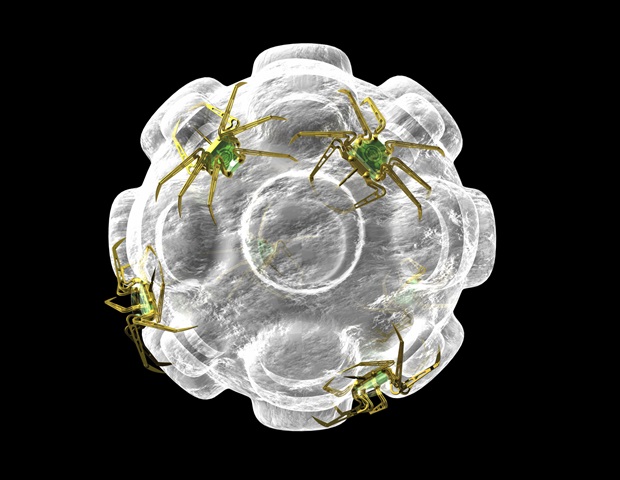
When a tumor manages to nestle itself in the brain of a living being, it has - from the tumor's perspective - done something particularly clever.
Does the Hfq Protein Contribute to RNA Cargo Translocation into Bacterial Outer Membrane Vesicles?
Gram-negative bacteria release outer membrane vesicles (OMVs) that play a central role in host–pathogen interactions by transporting biomolecules, including proteins and nucleic acids. In this article, Marisela Velez and Véronique Arluison investigate the role of the RNA chaperone Hfq in mediating the interaction of small regulatory RNAs (sRNAs) with bacterial membranes. In this article, it …...
Fabrication of Thin-Film Composite Nanofiltration Membrane Employing Polyelectrolyte and Metal–Organic Framework (MOF) via Spin-Spray-Assisted Layer-by-Layer Assembly
Spin‑spray‑assisted layer‑by‑layer (LbL) assembly is an innovative technique for producing nanostructured thin films due to its rapid deposition and excellent substrate coverage. In this article, Farid Fadhillah fabricated a nanofiltration (NF) membrane composed of multilayers of polyethyleneimine (PEI) and poly(sodium‑4‑styrene sulfonate) (PSS) on a polysulfone (PSF) support. The resulting...